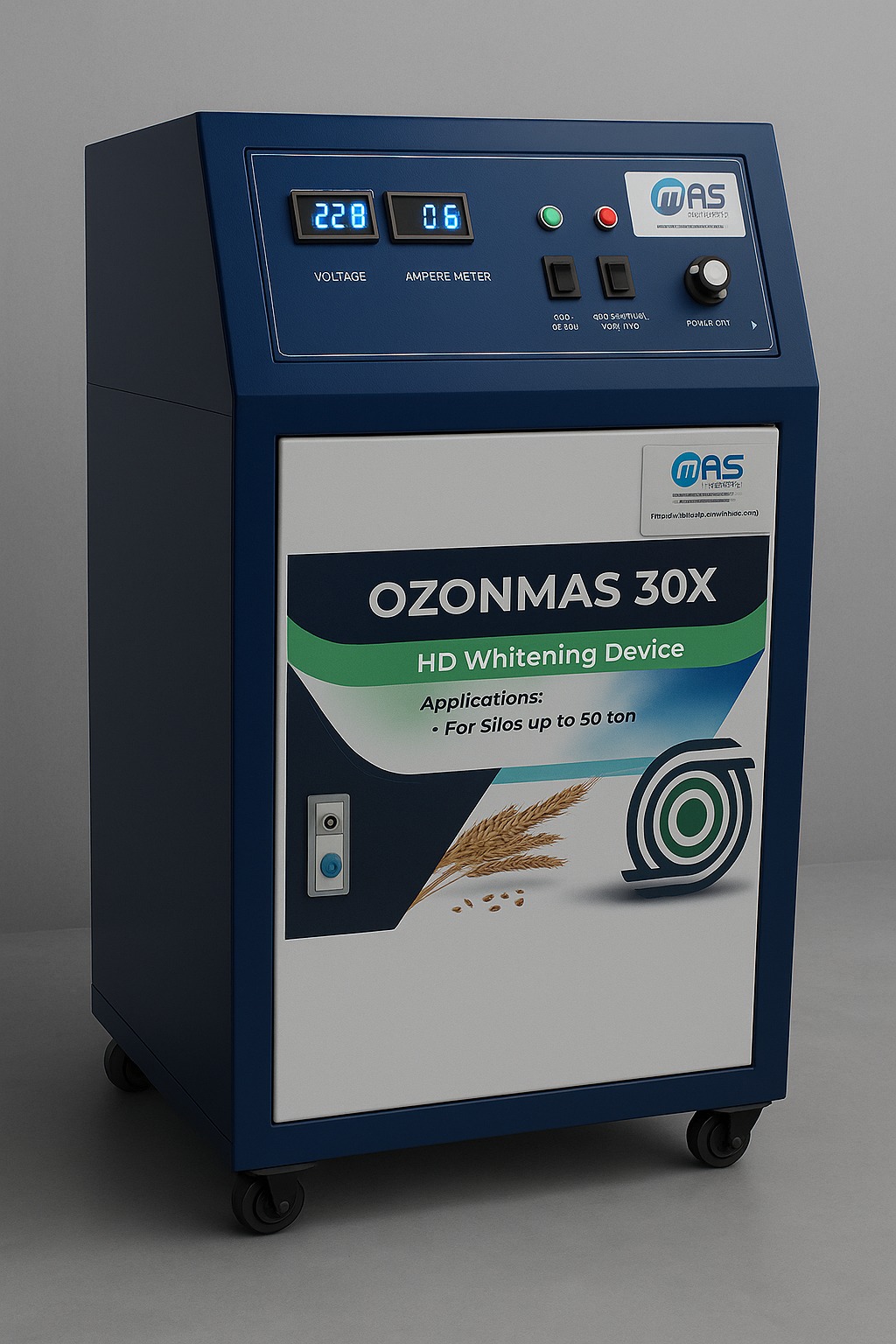
Ozonmas-Generator-30X
ozonmas-generator-30x
🚀 1. Ozone Output & Performance Ozone Production Capacity: ✔ Approximately 30 grams per hour (30 g/h) of ozone gas — sufficient for medium-sized tanks, rooms, or water flow. ✔ Real output may vary slightly depending on feed gas, humidity, and temperature in the generator cell. Adjustable Ozone Output: ✔ Many models include an output controller (dial or digital) to adjust ozone concentration from about 10–100 % of max capacity. ✔ This lets you tailor ozone levels for specific applications (e.g., light air sterilization vs heavy organic load in water). 🧪 2. Ozone Generation Technology Corona Discharge (CD) Method: ✔ Uses a high-voltage electrical discharge between electrodes to convert oxygen molecules (O₂) into ozone (O₃). ✔ CD technology is robust, efficient, and suitable for continuous operation. Dielectric Components: ✔ Ozone generator cells typically use quartz or ceramic tubes as the discharge medium — resistant to corrosion by ozone. ✔ Quartz/ceramic surfaces help maintain stable ozone output and extend service life. 🌬️ 3. Feed Gas System Feed Gas Options: ✔ Dry Air: A built-in air pump draws ambient air, dries it, and delivers it into the ozone cell. ✔ Oxygen (optional): Using an oxygen concentrator or oxygen cylinder yields a higher ozone concentration and more efficient ozone production. Gas Flow: ✔ Typical feed gas flow for a 30 g/h generator is about 8–15 L/min depending on whether air or oxygen is used. ✔ Oxygen feed systems often require a flow regulator to maintain stable pressure. ❄️ 4. Cooling & Thermal Management Air Cooling: ✔ Standard on most 30 g/h models — uses a fan and heat-dissipating fins to remove heat from the ozone cell and electronics. Water Cooling (Optional on Some Designs): ✔ Improves heat removal when running high ozone outputs continuously or in hot environments. ✔ Leads to more stable ozone output and longer component life. ⚡ 5. Electrical & Control Systems Input Power: ✔ Typical mains power supply: 220–240 V AC, 50/60 Hz (some models also support 110–120 V). ✔ Power consumption varies by design — often between 250–800 W depending on cooling, feed gas method, and electronics. Control Interface: ✔ Simple models: Manual control knob for output level. ✔ Advanced units: Digital panel with display, timer, automatic shutdown, and status indicators. Safety Controls: ✔ Over-temperature protection prevents overheating of the high voltage cell. ✔ Over-current protection safeguards against electrical faults. ✔ Some units include remote control inputs (e.g., 4–20 mA signal) for integration into external systems. 🛡️ 6. Safety & Ozone Handling Features Ozone Leak Prevention: ✔ Seals and ozone-resistant gaskets reduce leakage around cell housing and gas fittings. ✔ Ozone use requires good ventilation or an ozone destruct system to safely break down excess ozone before release. Ozone Sensors (Optional): ✔ Some systems can integrate external ozone concentration sensors in air/water lines to modulate output for safety and efficiency. 🏗️ 7. Construction & Materials Housing: ✔ Usually stainless steel (SS304 or SS316) or corrosion-resistant coated metal to withstand ozone’s oxidizing effects. Internal Components: ✔ Ozone generator cell designed for high-frequency discharge and long life. ✔ Air dryer or filter (on air-fed units) to remove moisture before ozone production. Connections: ✔ Standard ozone-resistant fittings (e.g., PFTE tubing or silicone). ✔ Quick-disconnect or threaded gas ports for easy installation. 📏 8. Physical & Installation Specs Dimensions: ✔ Varies by manufacturer — compact or cabinet style depending on capacity and accessories. ✔ Typical medium-range units are floor / rack-mount sized. Weight: ✔ Usually between ~10–40 kg for air-fed models; heavier if integrated oxygen feed or cooling. Mounting Options: ✔ Floor-standing cabinet or wall-mounted configuration depending on model. 🌐 9. Typical Applications Water Treatment & Disinfection: ✔ Municipal & industrial wastewater treatment ✔ Drinking water purification ✔ Swimming pool and spa sanitation ✔ Aquaculture systems Air Purification & Odor Control: ✔ Factories, warehouses, food processing plants ✔ Smoke or VOC odor removal ✔ HVAC air sterilization Ozone Sterilization: ✔ Cold storage, clean rooms, food surfaces 📊 10. Performance & Efficiency Notes Ozone Concentration: ✔ Air-fed units typically produce lower ozone concentration (due to nitrogen dilution). ✔ Oxygen-fed units produce higher ozone concentration (more efficient oxidation). Service Life: ✔ With proper cooling and dry feed gas, generator life can exceed 10,000 hours of operation.
Key Features
Technical Specifications
Detailed performance and configuration notes.
Specifications will be available upon request.
Deployment Support
Our engineers provide sizing, installation guidance, and commissioning support for every product.
Talk to Engineering