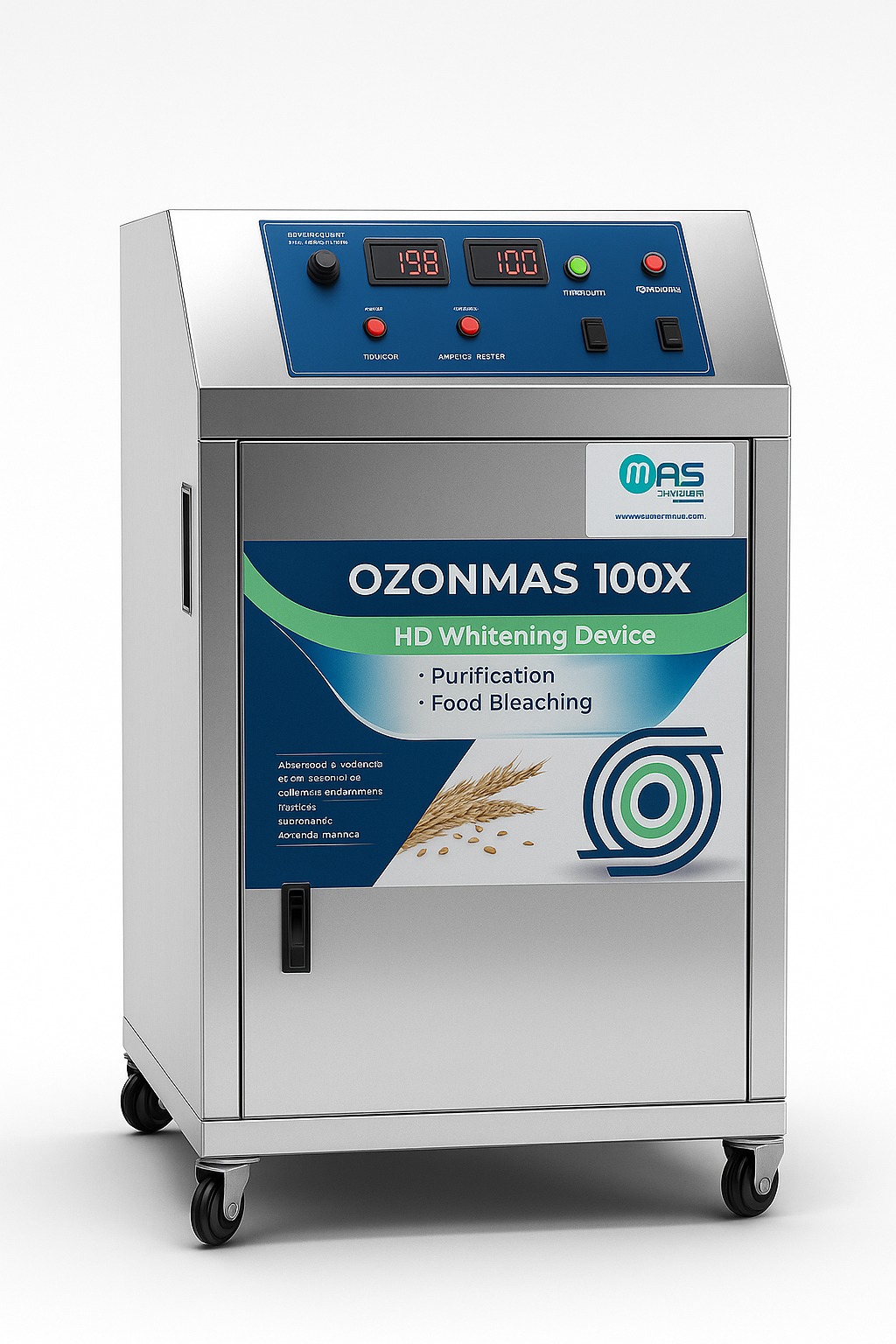
Model
OZONMAS-GENERATOR-100X
Cooling
Water-Cooled Generators
Grade
Industrial
O₃
Pure Ozone
Complete Product Lineup
Explore our full range of ozone generation and treatment solutions
Ozonmas-Generator-100X
High-capacity industrial ozone generator designed for large-scale food processing and sterilization applications. Features advanced corona discharge technology for maximum ozone output and efficiency. ⚙️ 1. Ozone Output & Adjustability Ozone production rate: ~100 g/hour — strong enough for industrial water treatment, air purification or odor control in large spaces. Adjustable output: Many units let you dial ozone output from ~10 % up to 100 % to match treatment needs. 🧪 2. Feed Gas Type Some generators use ambient dry air (cheaper but lower ozone concentration). Others use pure oxygen feed (from an oxygen concentrator or tank) to get higher ozone concentration and efficiency. 🔥 3. Technology Core Corona discharge technology is most common for this scale — efficient and durable for continuous use. Some use quartz or ceramic discharge tubes that are ozone-resistant and long-lasting. ❄️ 4. Cooling System Ozone production generates heat, so cooling affects performance & lifetime: Air cooling – simpler, less costly. Water or glycol cooling – better heat management for continuous heavy duty operation. 🛡️ 5. Control & Safety Features Depending on model: Ozone concentration regulation or control panel displays. Protections like over-current, over-temp cutoff, fault indicators. Some high-end industrial units include PLC/remote monitoring and data logging. 🧰 6. Build & Materials Stainless-steel casing and corrosion-resistant internals help durability, especially in humid environments. Quality seals and insulation reduce ozone leakage and protect electronics. 🧠 7. Applications 100 g/h ozone generators are typically used for: Water treatment (drinking, wastewater, pools). Industrial air purification & odor control (chemical plants, large workshops). Food processing (sanitize wash water, storage areas). Biological sterilization in labs or pharma facilities. ⚡ 8. Power & Size Power draw may be 1 kW or more for large industrial units. These machines tend to be sizeable (often floor-standing) and heavier.
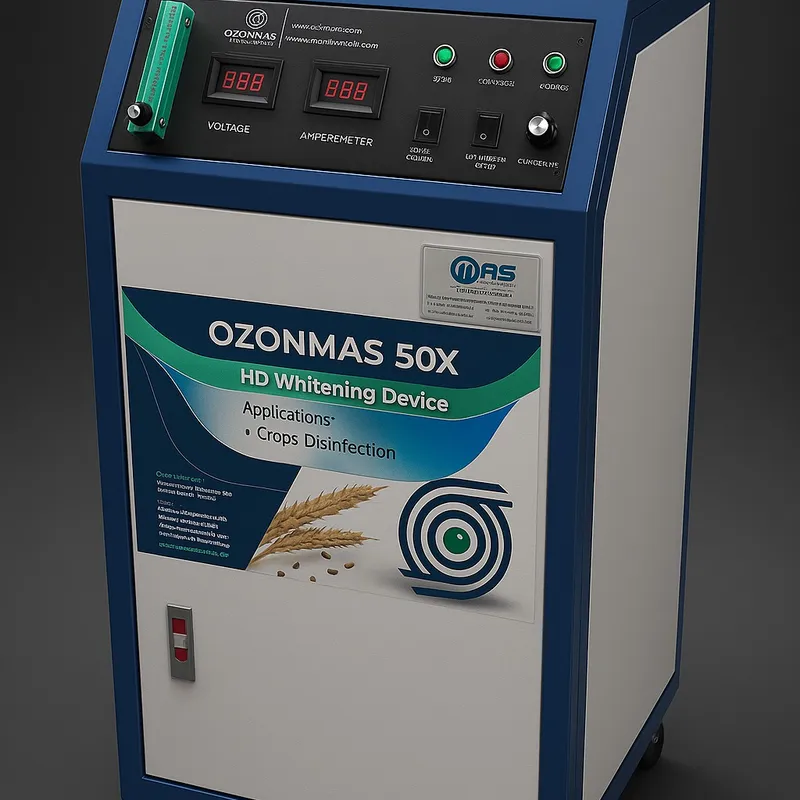
Ozonmas Generator-50X
Medium-capacity ozone generator perfect for food storage facilities, cold rooms, and medium-sized processing plants. Offers reliable performance with low maintenance requirements. ⚙️ 1. Ozone Output & Adjustment Ozone production: ~50 g/h standard output. Adjustable output: Many models let you control ozone output (e.g., 10–100%) to match treatment needs. 🧪 2. Feed Gas Type Dry air or oxygen feed: Some units use dry, clean air; others use oxygen (higher ozone concentration). Oxygen flow rate: Typically around 8–11 L/min on oxygen-fed models. 🔥 3. Generation Technology Corona discharge (CD): Most use corona discharge with quartz or ceramic tubes — efficient and reliable. ❄️ 4. Cooling System Air cooling or water cooling: Helps manage heat for stable operation and longer unit life. Some designs combine air + water cooling for enhanced performance. ⚡ 5. Electrical & Power Input voltage: Standard mains supply, usually 110–240 V, 50/60 Hz depending on model. Power consumption: Varies by design — e.g., ~530 W to ~945 W or more. 🧠 6. Controls & Safety Output regulation: Many have output control knobs or digital control panels. Protection features: Over-heat/over-temperature and over-voltage protections are common in industrial models. Timer functions: Some include timers for scheduled ozone release. 💪 7. Construction & Materials Stainless steel or corrosion-resistant housing: Durable for industrial environments. Sealed ozone tubes and quality power supplies for continuous operation. 📏 8. Typical Physical Specs While specs vary: Dimensions: Often around ~50 × 40 × 90–115 cm for large cabinet styles. Weight: ~40–60 kg for heavier industrial units. 🧰 9. Common Applications 50 g/h ozone generators are used for: Water purification & treatment (e.g., wastewater, pools) Air sterilization & deodorization in factories, warehouses, food facilities Food and beverage processing sanitation Cold storage and germ-free rooms
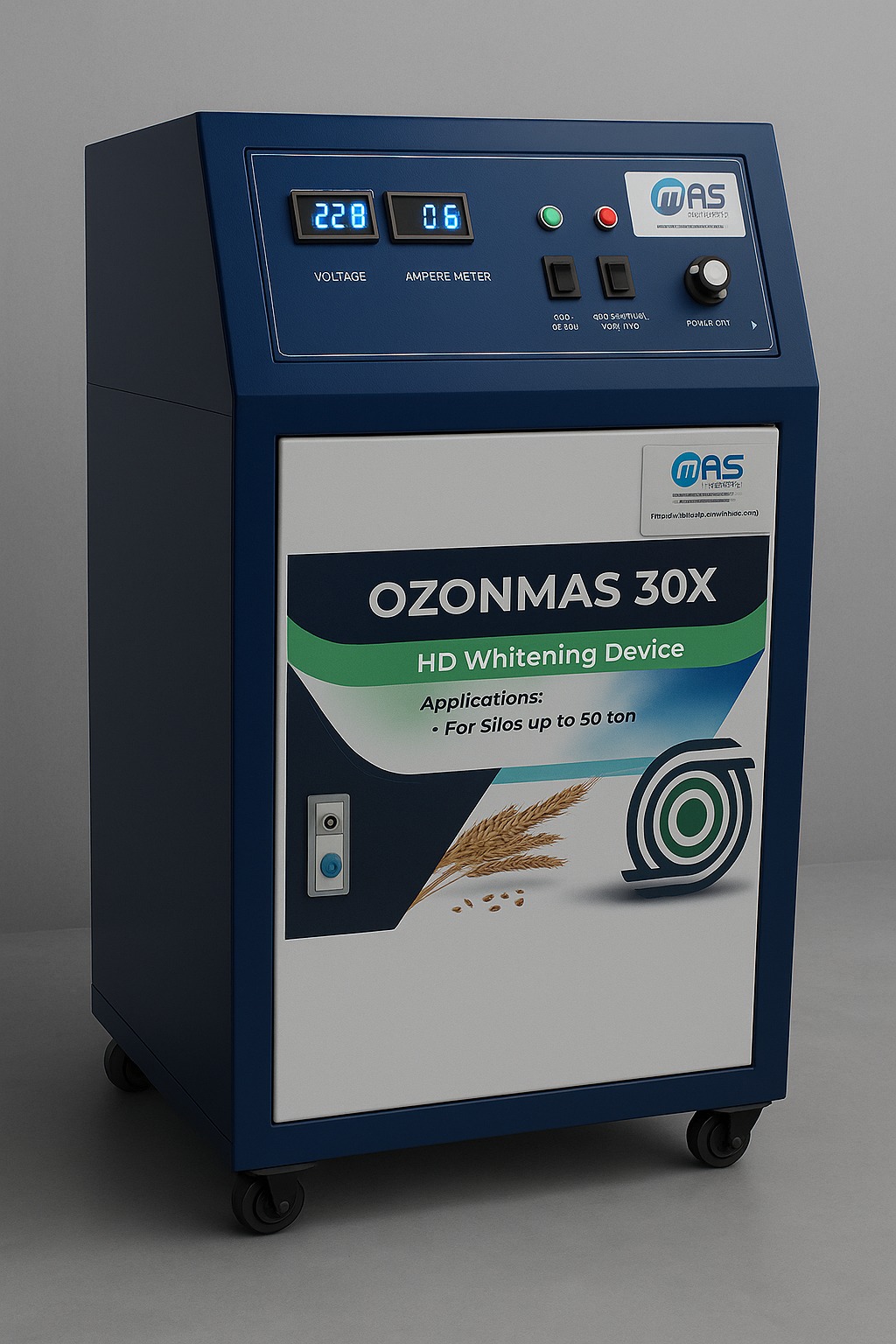
Ozonmas-Generator-30X
🚀 1. Ozone Output & Performance Ozone Production Capacity: ✔ Approximately 30 grams per hour (30 g/h) of ozone gas — sufficient for medium-sized tanks, rooms, or water flow. ✔ Real output may vary slightly depending on feed gas, humidity, and temperature in the generator cell. Adjustable Ozone Output: ✔ Many models include an output controller (dial or digital) to adjust ozone concentration from about 10–100 % of max capacity. ✔ This lets you tailor ozone levels for specific applications (e.g., light air sterilization vs heavy organic load in water). 🧪 2. Ozone Generation Technology Corona Discharge (CD) Method: ✔ Uses a high-voltage electrical discharge between electrodes to convert oxygen molecules (O₂) into ozone (O₃). ✔ CD technology is robust, efficient, and suitable for continuous operation. Dielectric Components: ✔ Ozone generator cells typically use quartz or ceramic tubes as the discharge medium — resistant to corrosion by ozone. ✔ Quartz/ceramic surfaces help maintain stable ozone output and extend service life. 🌬️ 3. Feed Gas System Feed Gas Options: ✔ Dry Air: A built-in air pump draws ambient air, dries it, and delivers it into the ozone cell. ✔ Oxygen (optional): Using an oxygen concentrator or oxygen cylinder yields a higher ozone concentration and more efficient ozone production. Gas Flow: ✔ Typical feed gas flow for a 30 g/h generator is about 8–15 L/min depending on whether air or oxygen is used. ✔ Oxygen feed systems often require a flow regulator to maintain stable pressure. ❄️ 4. Cooling & Thermal Management Air Cooling: ✔ Standard on most 30 g/h models — uses a fan and heat-dissipating fins to remove heat from the ozone cell and electronics. Water Cooling (Optional on Some Designs): ✔ Improves heat removal when running high ozone outputs continuously or in hot environments. ✔ Leads to more stable ozone output and longer component life. ⚡ 5. Electrical & Control Systems Input Power: ✔ Typical mains power supply: 220–240 V AC, 50/60 Hz (some models also support 110–120 V). ✔ Power consumption varies by design — often between 250–800 W depending on cooling, feed gas method, and electronics. Control Interface: ✔ Simple models: Manual control knob for output level. ✔ Advanced units: Digital panel with display, timer, automatic shutdown, and status indicators. Safety Controls: ✔ Over-temperature protection prevents overheating of the high voltage cell. ✔ Over-current protection safeguards against electrical faults. ✔ Some units include remote control inputs (e.g., 4–20 mA signal) for integration into external systems. 🛡️ 6. Safety & Ozone Handling Features Ozone Leak Prevention: ✔ Seals and ozone-resistant gaskets reduce leakage around cell housing and gas fittings. ✔ Ozone use requires good ventilation or an ozone destruct system to safely break down excess ozone before release. Ozone Sensors (Optional): ✔ Some systems can integrate external ozone concentration sensors in air/water lines to modulate output for safety and efficiency. 🏗️ 7. Construction & Materials Housing: ✔ Usually stainless steel (SS304 or SS316) or corrosion-resistant coated metal to withstand ozone’s oxidizing effects. Internal Components: ✔ Ozone generator cell designed for high-frequency discharge and long life. ✔ Air dryer or filter (on air-fed units) to remove moisture before ozone production. Connections: ✔ Standard ozone-resistant fittings (e.g., PFTE tubing or silicone). ✔ Quick-disconnect or threaded gas ports for easy installation. 📏 8. Physical & Installation Specs Dimensions: ✔ Varies by manufacturer — compact or cabinet style depending on capacity and accessories. ✔ Typical medium-range units are floor / rack-mount sized. Weight: ✔ Usually between ~10–40 kg for air-fed models; heavier if integrated oxygen feed or cooling. Mounting Options: ✔ Floor-standing cabinet or wall-mounted configuration depending on model. 🌐 9. Typical Applications Water Treatment & Disinfection: ✔ Municipal & industrial wastewater treatment ✔ Drinking water purification ✔ Swimming pool and spa sanitation ✔ Aquaculture systems Air Purification & Odor Control: ✔ Factories, warehouses, food processing plants ✔ Smoke or VOC odor removal ✔ HVAC air sterilization Ozone Sterilization: ✔ Cold storage, clean rooms, food surfaces 📊 10. Performance & Efficiency Notes Ozone Concentration: ✔ Air-fed units typically produce lower ozone concentration (due to nitrogen dilution). ✔ Oxygen-fed units produce higher ozone concentration (more efficient oxidation). Service Life: ✔ With proper cooling and dry feed gas, generator life can exceed 10,000 hours of operation.
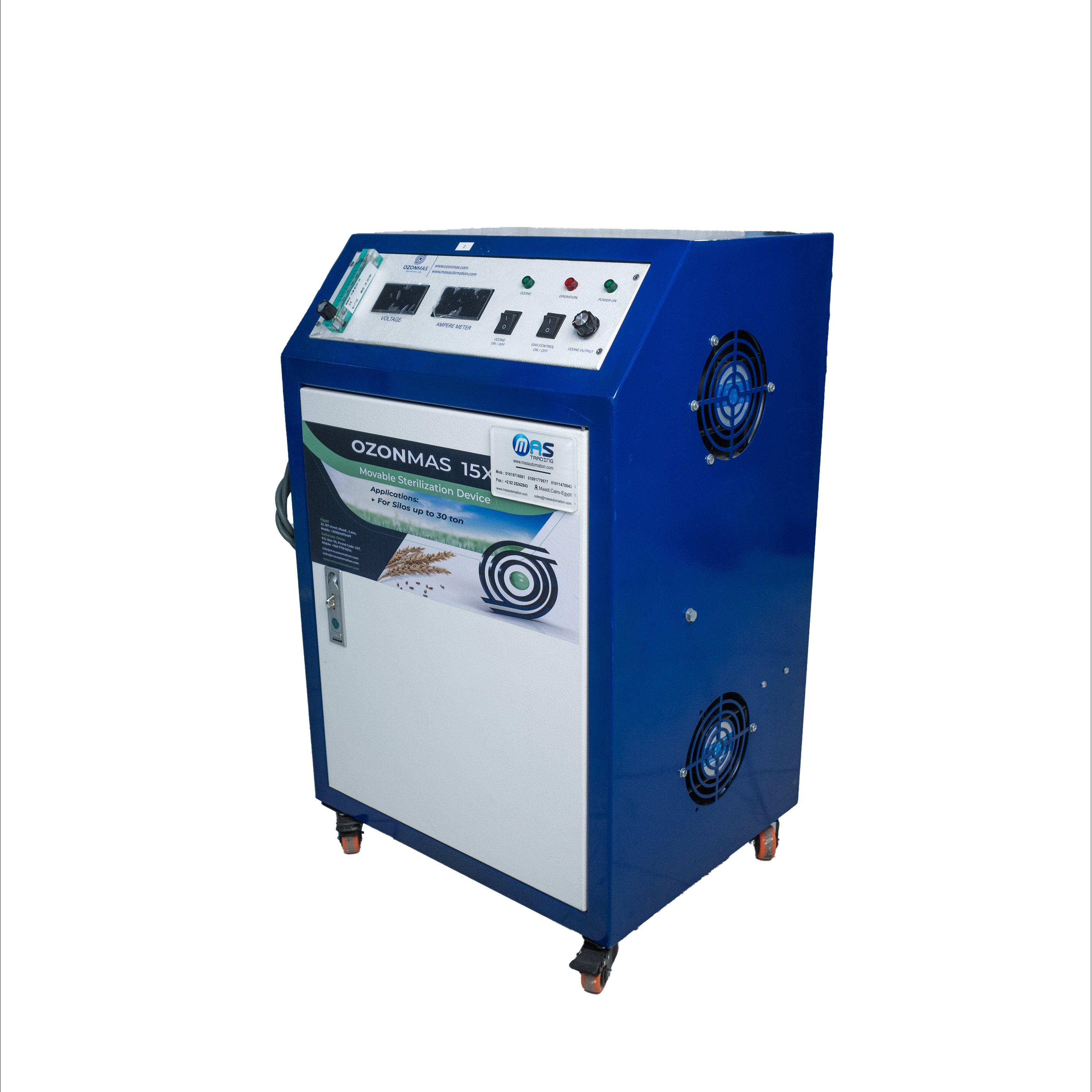
Ozone Generator X-15
🔷 1. Ozone Output & Performance Ozone Production Capacity: ✅ Produces about 15 g of ozone per hour (15 g/h) — suitable for treating air and water in medium spaces like rooms, clinics, storage areas, or smaller tanks. Adjustable Ozone Output: ✔ Many models allow you to adjust ozone output (often from ~10 % up to 100 %) so you can match ozone levels to the treatment needs (e.g., mild odor removal vs more intense disinfection). ⚙️ 2. Ozone Generation Technology Generation Method: ⚡ Most 15 g/h units utilize Corona Discharge (CD) technology, where high-voltage electrical discharge converts oxygen (O₂) into ozone (O₃) effectively and reliably. High-Efficiency Conversion: ✔ The ozone tubes in quality units have high ozone conversion efficiency — producing strong ozone levels with relatively low energy use. 🌬️ 3. Feed Gas System Air Feeding: ✔ Many 15 g/h ozone generators draw clean dry air with an internal air pump and process it to create ozone. Oxygen Feeding (Optional on Some Units): ✔ Some models offer oxygen feeding (from a cylinder or concentrator), which significantly increases ozone concentration — often up to 60-120 mg/L vs ~15-25 mg/L with air feed. ❄️ 4. Cooling & Thermal Management Air Cooling: ✔ Standard for most 15 g/h models — includes fans or air paths to dissipate heat from the ozone cell and keep operation stable. Improved Stability: ✔ Where present, combined air + water cooling keeps temperatures lower during extended runs and helps lengthen component life. ⚡ 5. Electrical & Safety Features Power Supply: ✔ Commonly designed for standard mains supply (e.g., 220–240 V, 50–60 Hz). ✔ Power consumption varies by model (often ~120–250 W or more depending on features). Output Regulation: ✔ Adjustable controls let you increase or decrease ozone output for precise dosing. Protections: ✔ Built-in protections such as over-temperature and over-current cutoffs prevent damage and improve safety (especially in models with digital controls or remote functions). 🏗️ 6. Construction & Materials Housing & Durability: ✔ Many units use stainless steel or corrosion-resistant enclosures that withstand ozone’s oxidizing effects. Component Quality: ✔ Durable high-frequency discharge tubes and robust power modules help ensure continuous and reliable operation with long service life. 📐 7. Physical & Installation Specs Size & Weight: ✔ Compact designs — often around 40 × 30 × 60 cm for cabinet units, or smaller for portable units. ✔ Weight typically around 10–20 kg depending on construction and features. Mounting: ✔ Some models are floor-standing, others may be wall-mounted or portable. 🧠 8. Control & User Interface Simple Controls: ✔ Basic models have manual control dials for output adjustment. Advanced Controls (Optional): ✔ Some modern units include digital displays, timers, remote control, Wi-Fi control, programmable operation, and touch panels, making them easier to schedule and monitor. 🧪 9. Ozone Concentration & Efficiency Typical Ozone Concentration: ✔ Air-fed units: ~15-25 mg/L ozone concentration. ✔ Oxygen-fed units: up to 60-120 mg/L or more, depending on oxygen supply. Feed Gas Efficiency: ✔ Models using oxygen concentrators or pure oxygen feed generally produce higher quality ozone with greater effectiveness in water treatment and sterilization. 🧰 10. Applications 15 g/h ozone generators work well for: ✔ Air purification and odor removal in rooms, offices, medical spaces, or homes. ✔ Surface and air disinfection — reduces bacteria, viruses, fungi, and allergens. ✔ Water treatment and disinfection — swimming pools, aquaculture tanks, drinking water, and small wastewater systems. ✔ Food storage and cold rooms — controlling odors and microbial growth.
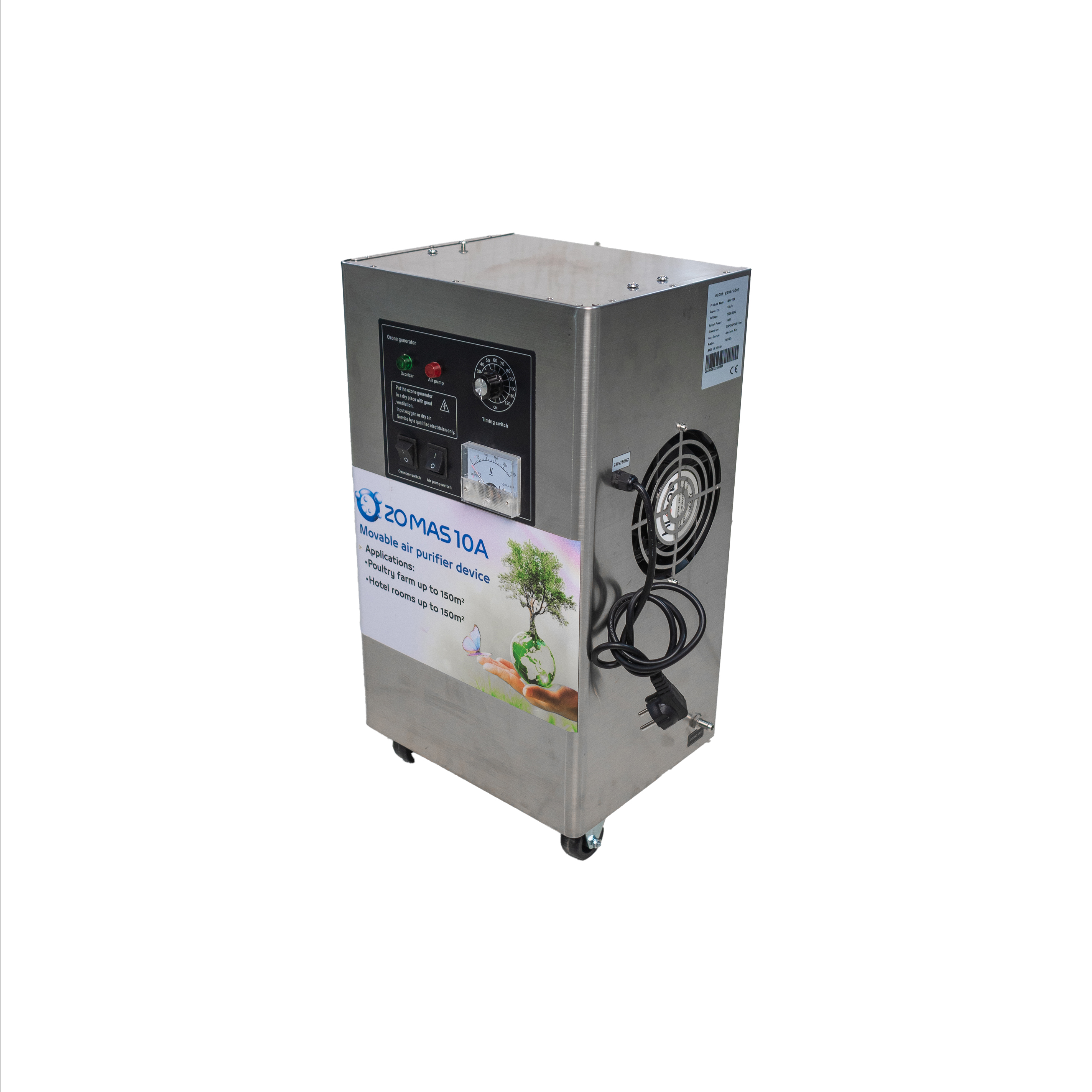
Ozone Water Treatment System 20mas10Aa
Complete ozone water treatment solution for washing fruits, vegetables, and food products. Eliminates bacteria, viruses, and pesticide residues without chemicals. The Ozone Water Treatment System 20MAS10Aa is a complete ozone‑based water purification solution engineered for effective disinfection and sanitation of water used in food processing, agriculture, and industrial applications. It uses the powerful oxidizing properties of ozone (O₃) to eliminate harmful microorganisms, degrade pesticides and organic residues, and improve overall water quality without the need for chemical disinfectants. This system is typically integrated at the point of water intake or within processing lines where sanitized water is crucial — such as washing fruits and vegetables, treating water for food and beverage production, or preparing clean water for industrial use.
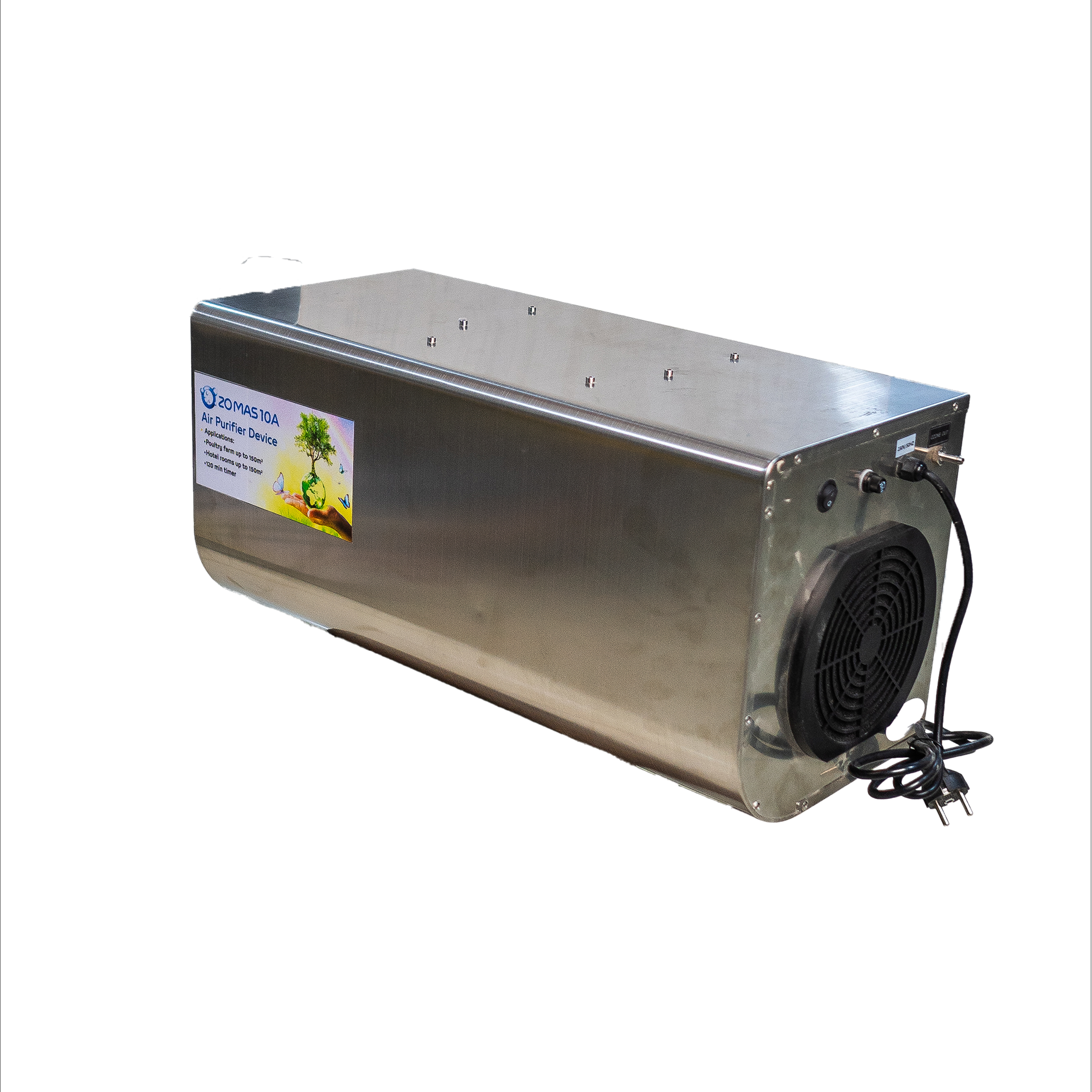
Ozone Cold Storage System 20mas10A
Specialized ozone system designed for cold storage facilities. Maintains freshness, prevents mold growth, and extends the shelf life of stored products. The Ozone Cold Storage System 20MAS10A is an engineered ozone‑based atmospheric management system intended for cold storage facilities, such as those used for fruits, vegetables, meat, seafood, dairy, and other temperature‑sensitive products. It introduces controlled quantities of ozone gas into the cold room environment to provide ongoing sterilization, odor control, and quality preservation. Unlike refrigeration alone — which only slows microbial activity — ozone actively oxidizes bacteria, mold, yeasts, and volatile organic compounds (VOCs) in the air and on surfaces, helping extend shelf life and maintain product quality without the use of chemical sanitizers. The name “20MAS10A” typically reflects a product code within the manufacturer’s lineup, with 20 often indicating output capacity relative to ozone dose.